Introduction
Network capital expenditure or CAPEX is the capital cost of building the heat network infrastructure. This includes any capital costs associated with delivering the heat in the network to the end user. The CAPEX costs of heat networks can generally be broken down into the following primary components:
- Heat Generation Plants: The core of any heat network is the heat generation plant, or energy centre, which provides thermal energy to the system. In the context of the Community Heat Development Unit (CHDU) techno-economic model (TEM), this includes the cost of the heat pumps, coolant pumps, backup boilers and thermal storage.
- Transmission and Distribution Network: The network of insulated pipes used to transport hot water from the energy centre to customers represent a large portion of the capital cost of a heat network. The capital costs include the costs of the pipes themselves as well as the costs of installation, such as building trenches in highways and customer’s land. The costs of pipework and trenching operations used in the CHDU TEM are covered in a separate article on this website.
- Customer HIUs and Connections: At each building or facility connected to the network, a Heat Interface Unit (HIU) is needed to transfer heat from the network to the local heating system along with metering equipment. Connection costs can vary significantly depending on the distance of customers from the main network, the complexity of interfacing with existing heat systems, and any necessary building upgrades to accommodate the district heating service.
- Design and Development Costs: The process of designing a district heating system is complex and requires detailed planning and modelling work. Engineering consultants are often engaged to assess the feasibility of the project, perform environmental impact studies and design the system layout ensuring the network is compliant with local and national regulations.
- Connected Renewable Energy Generation: Our research suggests that powering the pumps using energy generated by a connected renewable source significantly improves the financial viability of a heat network project, particularly where surplus generation can be sold to an on-site offtaker or exported to the grid. It is therefore important to include the capital costs of connected renewables in the CHDU TEM.
This article describes how CAPEX costs are estimated within the CHDU techno-economic model for a generic district heat network site.
Energy Centre Capital Costs
Air Source Heat Pump
We have used prices quoted by a large international supplier of industrial scale ASHPs. Prices were provided for a range of ASHPs of varying power output, designed for a flow temperatures of 70-85oC. A power law relationship was derived between the ASHP capital costs and power rating. This relationship/formula is presented in Figure 1 and is used in the CHDU TEM to estimate the cost of the required heat pump.
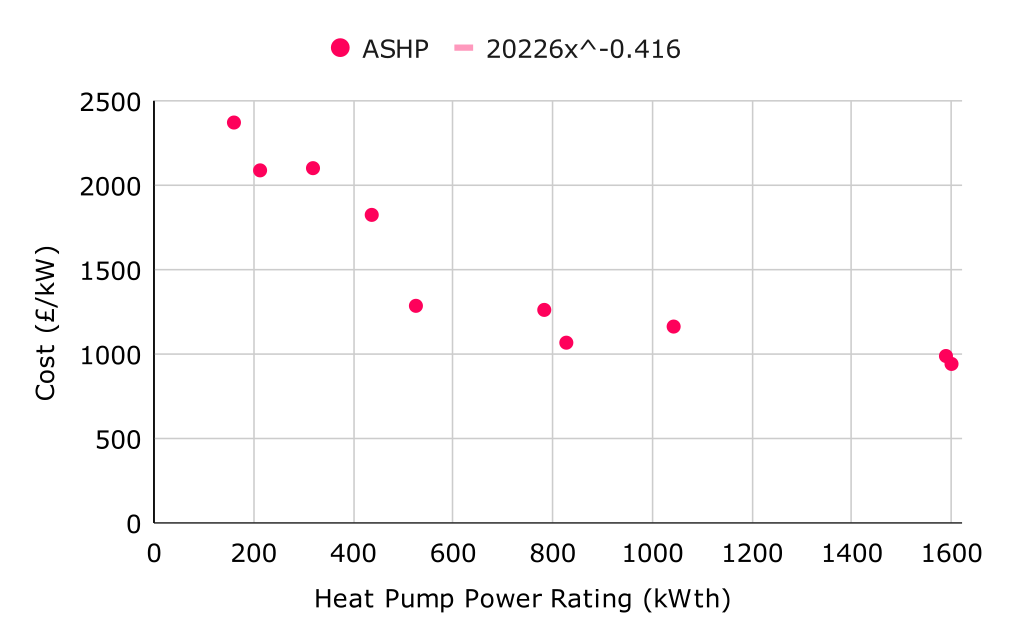
Figure 1 – ASHP CAPEX inflated to 2024 prices
Coolant Pumps
The capital cost of the coolant pumps is modelled as a flat cost of £250,000 which is based on learning from developing a heat network feasibility study at Bishop’s Castle.
Backup Gas/Oil Boilers
The capital cost of the backup boilers is estimated using the £90/kW cost of a gas boiler taken from the Buro Happold study referenced below. The backup boilers are sized by dividing the peak demand by the boiler efficiency, which is then multiplied by £90/kW to estimate the total capital cost.
Thermal Storage
Capital costs of insulated hot water tanks for thermal storage are presented in Figure 2. These values are derived from a curve fit to data published by the Danish Energy Agency, converted from Euros to GBP and inflated from 2018 to 2024 prices based on CPIH.
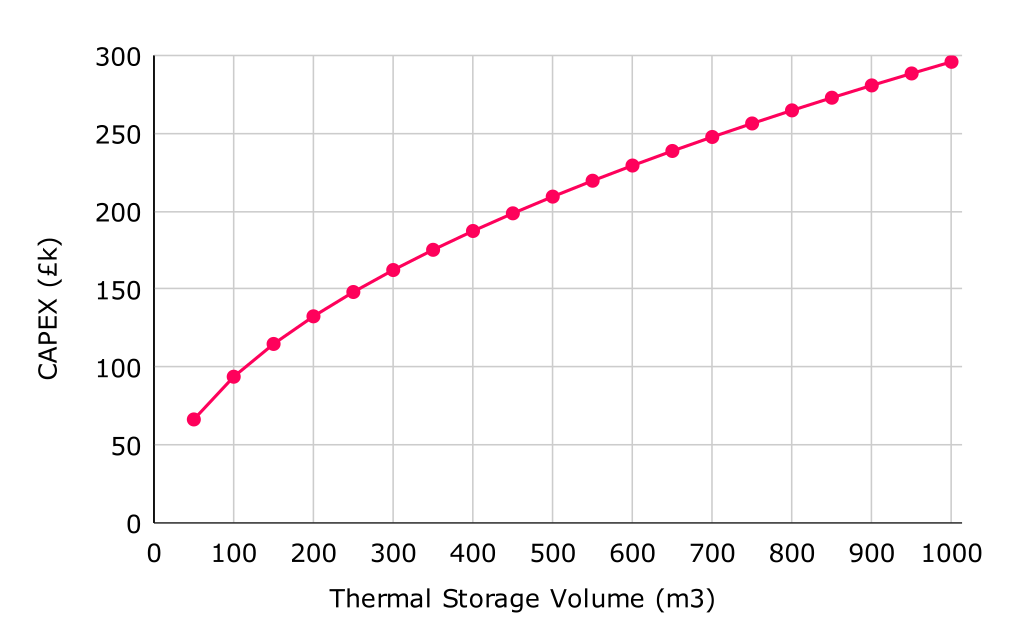
Figure 2 – Insulated hot water tanks CAPEX inflated to 2024 prices
Heat Interface Unit and Household Connection Capital Costs
The cost of connecting individual buildings to the heat network has been estimated using the values published in the 2016 Buro Happold report “Connecting Existing Buildings to District Heating Networks”. The reported connection costs include the heat interface unit (HIU), installation, insulated pipework connecting the building to the heat main in the street, testing and metering, with different costs reported for different building types including houses, low-rise flats and high-rise flats.
The CHDU techno-economic model models every domestic building (houses and individual flats) using the connection costs for a house since the Buro Happold report estimates that the cost of connecting a house to a network is higher than a single flat. This connection cost is also used for non-domestic buildings. Although the cost of connecting large non-domestic buildings to the heat network is expected to be higher than for domestic properties, it is anticipated that the owners of these buildings may be able to contribute to their connection costs, whilst still saving compared to the cost of installing individual low carbon heating systems. The costs of the pipework connecting the building to the heat main in the street have been removed from the Buro Happold values since these costs are included in the district heating pipework cost estimate used in the CHDU techno-economic model.
The total capital cost of connections is estimated by multiplying the individual connection cost for a house by the number of domestic and non-domestic connections to give the total capital costs of connections.
All connection costs have been inflated to 2024 prices using CPIH.
Design and Development Capital Costs
Heat network design and development is typically conducted by large professional engineering companies and involves RIBA stage 3/4 detailed network design and design for construction. Ramboll’s 2024 study of Scottish heat network costs indicated that design/development costs are approximately 15% of the CAPEX costs based on insights from cost analysis and high-level professional judgement. The CHDU TEM models design and development work as costing 10% of the total network CAPEX, which assumes some of the development costs may be grant funded. Possible grant funding schemes are discussed in the CHDU final report.
Commissioning Costs
The process of commissioning a heat network takes a heat network from installed stage to operational stage. Ramboll’s 2024 study of Scottish heat network costs indicated that commissioning costs are approximately 10% of the CAPEX costs based on insights from cost analysis and high-level professional judgement. For the scale of heat networks which are considered in the CHDU project, these costs could be >£1.5 million, which appears excessive. The CHDU TEM models commissioning costs at 5% of the total network CAPEX.
Renewable Generation Capital Costs
There are three main components to the capital costs included in the TEM which are associated with renewable electricity generation:
- Purchasing and installing renewable technology.
- Purchasing and installing the cable connecting the renewable generator to the energy centre and grid connection point.
- The connection to the grid.
Solar
A solar unit price of £979/kW for the installation of ground mounted solar has been derived from the quoted price in the Bishop’s Castle feasibility report. An estimate for the capital cost of solar panels in the model is given by multiplying the solar unit price by the estimated array capacity.
Wind
The cost of purchasing and installing a wind turbine, excluding the cost of connecting to the grid, is modelled as £1,350,000/MW. This cost has been derived from existing wind projects which Sharenergy has been involved in.
Cabling Costs
The cost of the cable and trenching operations to connect the renewable generator to the heat network energy centre is modelled as £150/m based on Sharenergy’s experience.
Grid Connection Costs
It is anticipated that any renewable generation developed alongside the heat network will share a grid connection with the heat network energy centre and ASHPs. It is expected that the connection requirements of the wind turbine will dominate the cost of the grid connection for the scale of networks being considered since the peak power of the wind turbine is expected to far exceed the peak electrical demand of the ASHPs.
The cost of connecting to the grid will depend on the specifics of the electricity network and DNO at each potential heat network site. For the purposes of site search grid connection costs have been modelled as £150,000 per 900kW of peak wind turbine power output, based on a quote received for a grid connection at the Bishop’s Castle wind turbine site. The cost of purchasing and installing the cable to connect the turbine to the grid connection point is an additional cost on top of this.
Capital Cost Contingency
A contingency of 10% is applied to all capital costs.
Summary of Capital Costs
| Component | Capital Costs |
| Energy Centre | |
| ASHPs | y = 20,226 x-0.416 (where x is the costs in £/kW and y is the heat pump power rating in kWth). |
| Coolant pumps | Flat cost of £250,000. |
| Backup boilers | £90/kW x peak demand / boiler efficiency. |
| Thermal storage | Based on Danish Energy Agency data. |
| Energy centre building | Flat cost of £450,000. |
| Transmission and Distribution Network | |
| Pipework costs | These are discussed in are covered in a separate article on this website. |
| Customer Connections and Heat Interface Units | |
| Internal works and HIUs assuming building already has a wet heating system | £9,088 / property, note that the connecting pipework from the street to the property is covered in the transmission and distribution network pipework costs. |
| Planning, Design and Regulatory Costs | |
| Commissioning costs | 5% of the total CAPEX. |
| Design & Project Management | 10% of the total CAPEX. |
| Renewables | |
| Purchase and installation of wind generation | £1,350/kW |
| Purchase and installation of solar generation | £979/kW |
| Cabling connecting renewable to the grid | £150/m |
| Grid connection (renewables and energy centre) | £167/kW |
| Contingency | |
| Project wide CAPEX | A contingency of 10% is added to the total project CAPEX. |
References
Danish Energy Agency, Thermal Storage Tank Capital Costs, pg. 59, https://ens.dk/sites/ens.dk/files/Analyser/technology_data_catalogue_for_energy_storage.pdf
Buro Happold (2016), Connecting Existing Buildings to District Heating Networks, https://www.usdn.org/uploads/cms/documents/161214_-_connecting_existing_buildings_to_dhns_-_technical_report_00.pdf
Sharenergy, Bishop’s Castle Heat Network Feasibility Study, 23rd March 2023, https://lightfootenterprises.org/wp-content/uploads/2023/04/BC-Heat-Feasibility-Study-v7c-23.3.23.pdf
Ramboll (January 2024), Cost Analysis of a Typical 4th and 5th Generation Heat Network, Scottish Enterprise, https://www.scottish-enterprise.com/media/cgshv05h/cost-analysis-of-a-typical-4th-and-5th-generation-heat-network.pdf